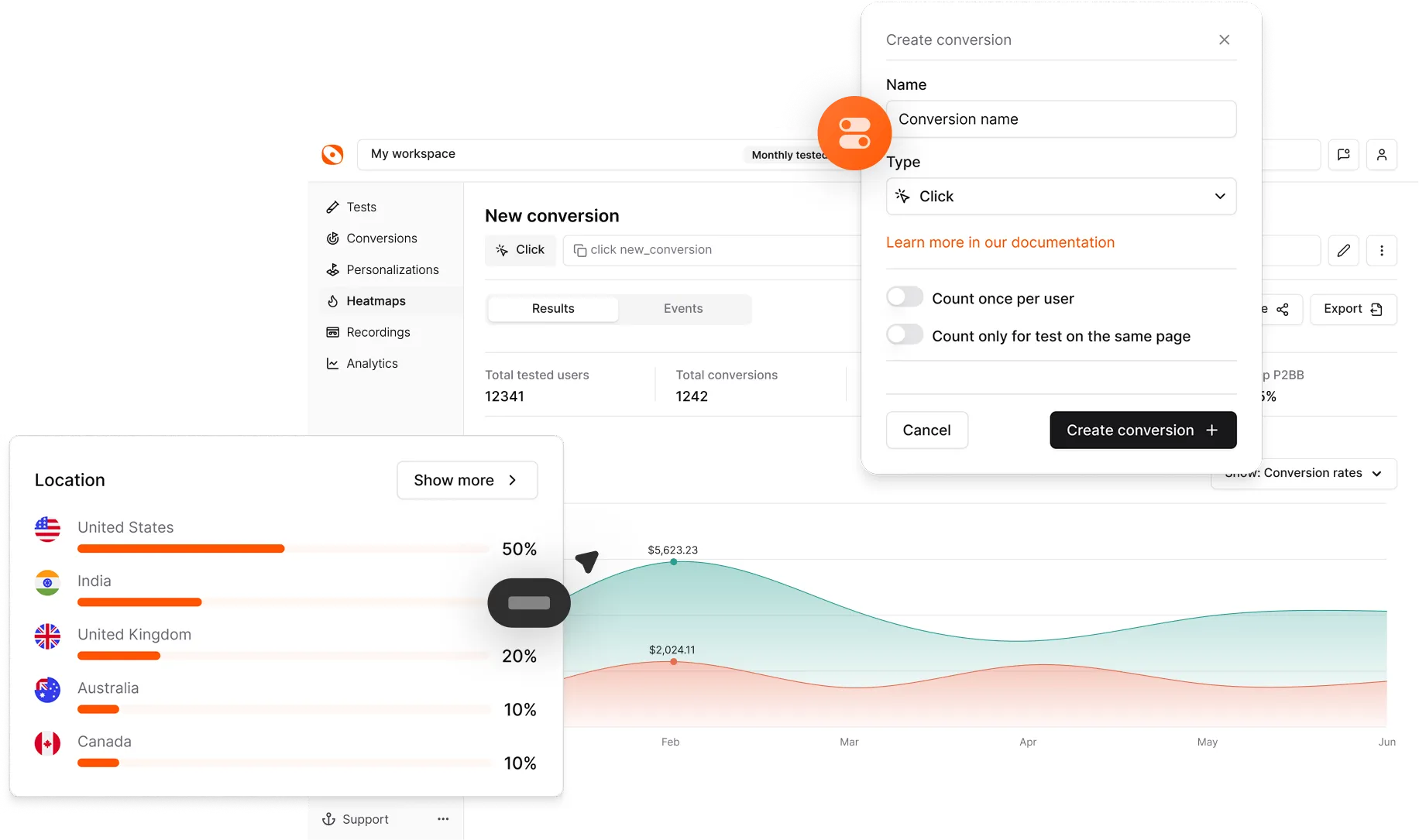
Understanding Conversion in the Context of A/B Testing
In digital marketing, a conversion refers to a specific action taken by a user that aligns with a business’s strategic goals. These actions range from signing up for a newsletter to completing a purchase. Conversions can be classified as:
• Macro-conversions: High-value actions like making a purchase or signing up for a service.
• Micro-conversions: Smaller actions such as filling out a form, clicking on a button, or downloading content that lead toward macro-conversions.
Understanding and optimizing these actions is crucial for marketers, especially when using A/B testing to enhance user experience and conversion rates.
The Role of A/B Testing in Conversion Optimization
A/B testing compares two or more variations of a webpage or app to determine which version yields better conversion results. By testing elements like headlines, calls-to-action (CTAs), images, or layouts, marketers can make data-driven improvements.
Example:
An eco-friendly retailer tests two versions of a product page:
• Version A: Features a green “Add to Cart” button.
• Version B: Features a blue “Add to Cart” button.
By measuring clicks and completed purchases, the company identifies the button color that drives higher conversions, ensuring future design decisions align with user preferences.
Benefits of Focusing on Conversion
1. Increased Revenue: Optimizing for conversions leads to more completed transactions or valuable user actions, boosting overall revenue.
• Example: A travel agency testing different newsletter sign-up forms discovers that a pop-up form increases sign-ups by 30%, growing their lead list and potential bookings.
2. Data-Driven Strategy: A/B testing reveals user behavior insights, enabling teams to refine content, layouts, and offers effectively.
• Example: A software company finds that users prefer concise product descriptions, leading to a 20% increase in downloads.
3. Enhanced User Experience: Testing helps identify pain points and improve the overall journey, resulting in satisfied users who are more likely to convert.
4. Iterative Improvement: Each test builds on past results, fostering a culture of continuous optimization.
Challenges in Measuring Conversion
1. Statistical Validity: Low traffic can make it difficult to achieve statistically significant results.
• Example: A niche jewelry e-commerce site may struggle to test a new checkout process with only a few hundred monthly visitors.
2. Defining Success: Stakeholders may prioritize different types of conversions. Aligning goals—whether sales, leads, or engagement—is essential.
3. External Factors: Variables like seasonality, market conditions, or advertising campaigns can influence conversion data, complicating the interpretation of test results.
Practical Steps for Implementing A/B Testing
1. Define Goals:
• Macro-conversion example: Increase online sales by 15%.
• Micro-conversion example: Grow newsletter sign-ups by 25%.
2. Identify Testable Elements:
• Landing page design.
• CTA wording or placement.
• Product descriptions or pricing displays.
3. Conduct the Test: Use tools like Google Optimize or Optimizely to split traffic between variations and track user behavior.
4. Analyze Results:
• Evaluate not just conversion rates but also supporting metrics (e.g., bounce rates, time spent on page).
• Look for anomalies that may suggest underlying issues.
5. Iterate and Scale: Implement winning variations, refine strategies, and test further to sustain improvements.
Conclusion
Conversions are a cornerstone of digital marketing success, representing key user actions that drive business goals. A/B testing is a powerful tool for optimizing conversions, offering clear, data-backed insights into what resonates with users.
While challenges like statistical significance and goal alignment exist, a structured approach to testing can overcome these hurdles. By focusing on continuous improvement and user-centric design, businesses can enhance their online presence, achieve higher conversion rates, and foster sustained growth in the competitive digital landscape.